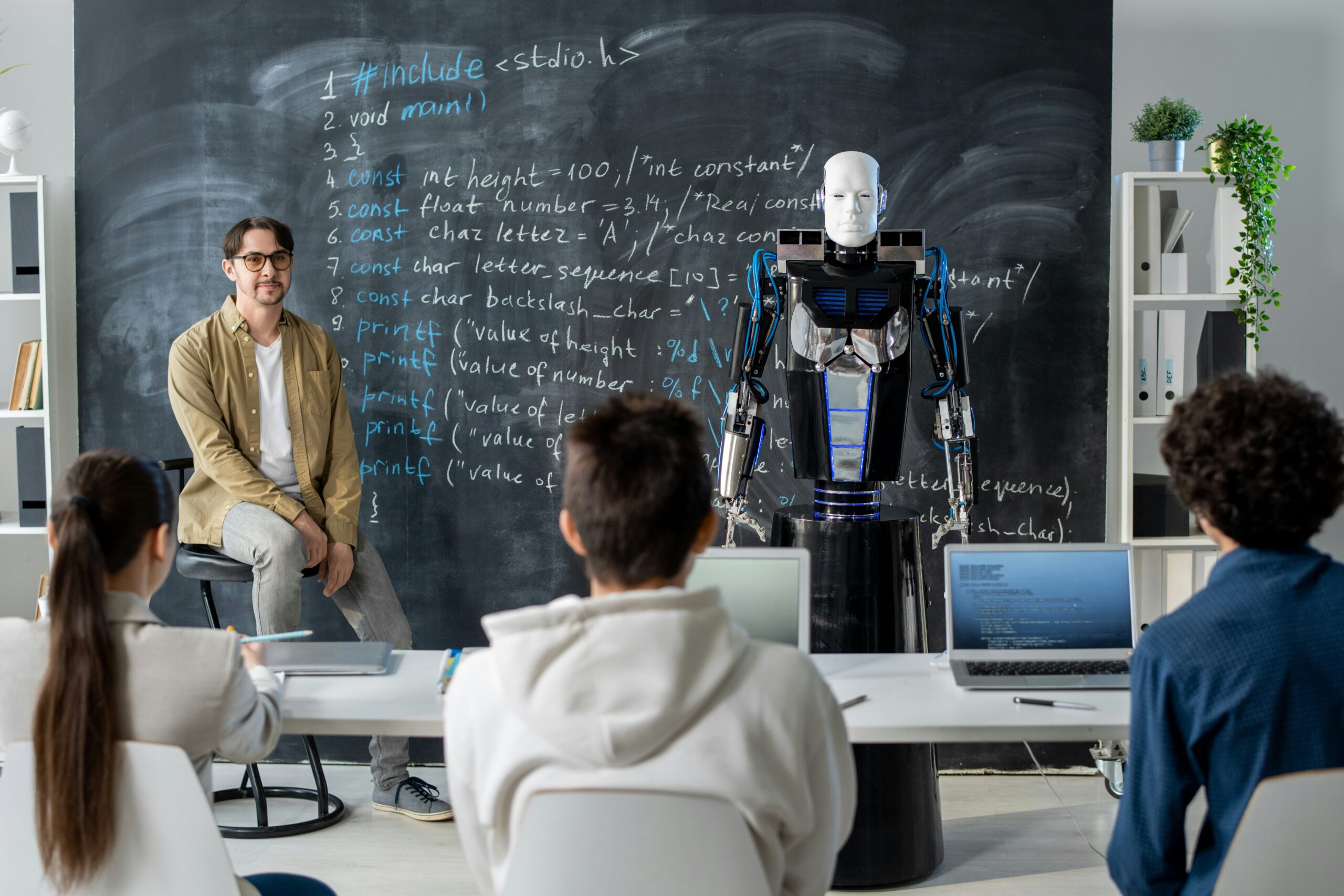
Artificial intelligence is changing many fields, and education is no exception. Today, educators can use AI as a think partner to improve lesson development, design better assessments, and shape smarter educational policy. Rather than replacing teachers or leaders, AI can support their thinking. When used well, it helps teams work faster, explore new ideas, and make informed decisions. As a result, schools can respond to student needs with greater clarity and confidence.
This approach focuses on collaboration. Teachers, administrators, and policymakers still lead the process. However, AI tools can analyze data, suggest ideas, and highlight patterns. Therefore, education systems can move from guesswork to evidence-based planning. In addition, AI can help reduce workload, which gives educators more time to focus on students.
Understanding AI as a Think Partner
Many people think of artificial intelligence as a tool that gives quick answers. However, it can also serve as a thinking partner. A think partner does not make final decisions. Instead, it asks questions, offers options, and helps refine ideas. This role fits well in education.
For example, a teacher can use AI to brainstorm lesson activities. The teacher provides the grade level, subject, and learning goals. Then the AI suggests examples, discussion prompts, or project ideas. After that, the teacher reviews and adjusts the suggestions. This process keeps the teacher in control while expanding creative options.
Moreover, AI can help educators examine their assumptions. If a lesson plan seems weak in alignment with standards, AI can point out gaps. Consequently, teachers can revise the plan before presenting it to students. This type of support strengthens instructional design and builds confidence.
Improving Lesson Development with AI
Lesson development requires planning, creativity, and alignment with standards. It also requires time, which teachers often lack. AI can support this work in several ways.
First, AI can help organize content. Teachers can input learning objectives, and AI can generate a structured outline. This outline can include key concepts, examples, and practice activities. Then the teacher can refine the structure to match classroom needs.
Second, AI can suggest differentiated strategies. Students learn at different speeds and in different ways. Therefore, teachers must adapt lessons to meet diverse needs. AI can recommend adjustments for advanced learners, struggling students, or multilingual learners. As a result, lessons can become more inclusive.
Third, AI can help integrate real-world connections. Students often engage more when they see practical value in what they learn. AI can provide current examples, case studies, or project ideas. Then, teachers can choose the most relevant ones. This step keeps learning meaningful and engaging.
Additionally, AI can support curriculum mapping. When schools design long-term plans, they must ensure consistency across grades. AI can analyze standards and help identify overlaps or gaps. Consequently, curriculum teams can create smoother learning progressions.
Enhancing Assessment Design
Assessment plays a key role in measuring student learning. However, designing strong assessments takes skill and time. AI can act as a partner in this process as well.
For instance, educators can use AI to generate practice questions aligned with specific standards. Then they can review the questions for accuracy and clarity. This process can save time while maintaining quality control.
Furthermore, AI can help create different question types. Teachers can request multiple-choice items, short-answer prompts, or performance tasks. As a result, assessments can move beyond simple recall and test deeper understanding. This variety supports critical thinking and problem-solving.
AI can also help analyze assessment results. When teachers enter student performance data, AI can identify trends. It can show which concepts students understand and which ones need review. Therefore, teachers can quickly adjust instruction. This timely feedback improves student outcomes.
In addition, AI can support formative assessment. Teachers can use short check-ins during lessons. AI tools can help interpret responses and suggest follow-up actions. Consequently, instruction becomes more responsive and flexible.
However, educators must carefully review all AI-generated content. Human judgment remains essential. AI supports decisions, but it does not replace professional expertise.
Supporting Data-Driven Educational Policy
Educational policy shapes large systems, including districts and states. These decisions affect funding, curriculum standards, teacher support, and student services. Therefore, policy development requires careful analysis.
AI can help policymakers analyze large datasets. For example, it can analyze student achievement trends, attendance records, and graduation rates. Then it can highlight patterns that may not be visible through manual review. As a result, leaders can base decisions on evidence.
Moreover, AI can simulate possible outcomes. If policymakers consider a new program, AI can model different scenarios. This process can show potential impacts on student performance or budget allocation. Consequently, leaders can compare options before making final decisions.
AI can also support equity analysis. It can help identify achievement gaps among student groups. When leaders understand these gaps, they can design targeted interventions. Therefore, policies can focus on fairness and access.
In addition, AI can review feedback from teachers, parents, and students. It can summarize large volumes of survey responses. This capability helps leaders understand community perspectives. As a result, policy decisions can reflect real needs.
Still, human oversight remains critical. Policymakers must consider context, values, and ethical standards. AI provides insights, but leaders must apply judgment.
Ethical Use and Responsible Implementation
Using artificial intelligence in education requires careful planning. Schools must protect student privacy and data security. Therefore, institutions should choose tools that meet legal and ethical standards.
Transparency also matters. Teachers and students should understand how AI tools work. They should know what data the system uses and how it generates suggestions. When users understand the process, they can trust the results more easily.
Additionally, schools should provide training. Educators need guidance on how to use AI effectively. Without training, they may misuse tools or rely on them too heavily. However, with proper support, they can integrate AI thoughtfully.
Bias is another important issue. AI systems learn from data, and data can reflect existing inequalities. Therefore, educators must carefully review outputs. They should ask whether suggestions reflect fairness and accuracy. In this way, human oversight protects students.
Building a Culture of Collaboration
When schools use AI as a think partner, they promote a culture of collaboration. Teachers can share AI-generated ideas during planning meetings. Then teams can refine and improve those ideas together. This process encourages innovation.
Similarly, administrators can use AI to explore strategic plans. They can test different goals and analyze potential outcomes. Consequently, leadership conversations become more focused and productive.
Over time, AI can reduce the need for repetitive tasks. This shift allows educators to spend more time mentoring students and supporting professional growth. As a result, the school environment becomes more dynamic and student-centered.
Moving Forward with Confidence
Artificial intelligence offers powerful support for lesson development, assessment design, and educational policy. However, success depends on thoughtful use. Educators must lead the process, while AI acts as a partner in thinking and planning.
When schools combine human expertise with AI insights, they can improve efficiency and quality. In addition, they can strengthen equity and innovation. Therefore, AI can help education systems become more responsive and forward-looking.
By approaching AI as a collaborative tool rather than a replacement, educators can build stronger lessons, fairer assessments, and smarter policies. Ultimately, this partnership can support student success and long-term improvement across the education system.